12497 South Tamiami Trail, Unit 2, North Port, FL
A Simple Way to Improve Your Smile
A small chip on a front tooth, a gap between two teeth that draws more attention than you would like, a discolored tooth that does not respond to whitening, a tooth that is slightly shorter or narrower than its neighbor. None of these are urgent dental problems, but they are the kind of thing that catches your eye in every photograph and makes you conscious of your smile in conversation. Dental bonding fixes most of them in one appointment without altering the underlying tooth.
Dr. Annie Smith applies composite resin directly to the tooth surface, shapes it by hand and polishes it to a finish that blends with the surrounding enamel. Because the material bonds to the tooth rather than requiring any removal of structure, most bonding cases need no anesthesia and no preparation at all. The result is immediate, and every bonding treatment she performs is backed by our one-year warranty.
Schedule a Bonding Consultation
What Is Dental Bonding?
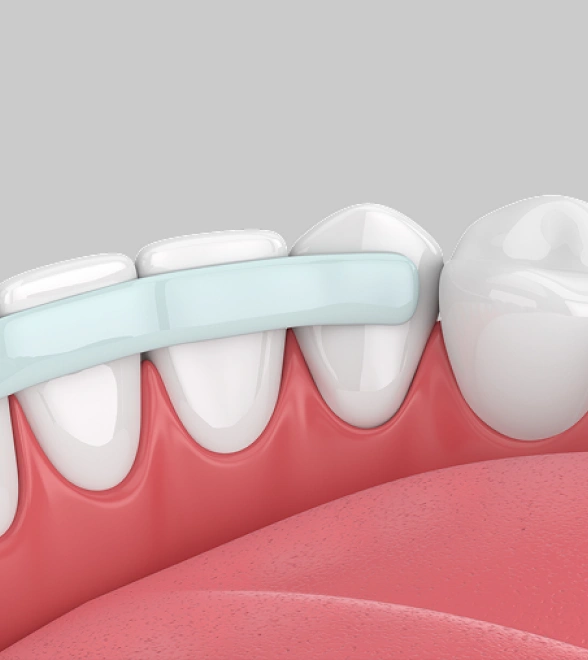
Dental bonding is a cosmetic and restorative procedure in which tooth colored composite resin is applied directly to a tooth, shaped to correct an imperfection and hardened with a curing light. The same material used for tooth colored fillings is used here, and it bonds to the natural enamel surface without requiring any significant removal of tooth structure.
The process is largely additive rather than subtractive. Rather than grinding the tooth down to fit a veneer or crown over it, bonding builds onto the existing tooth. That makes it one of the most conservative cosmetic treatments available, and one of the most reversible, since the tooth underneath remains unchanged.
What Dental Bonding Can Fix
Bonding covers a wider range of concerns than most patients realize when they first ask about it.
- Chipped or broken teeth – Repairs minor chips and restores a smooth, natural appearance.
- Cracked teeth – Seals and smooths minor surface cracks that do not extend into the root.
- Gaps between teeth – Closes small spaces by adding composite material to reshape teeth.
- Discoloration – Covers stains that may not respond well to whitening treatments.
- Misshapen or undersized teeth – Improves tooth shape and creates better proportions.
- Minor length discrepancies – Adds length to worn or shorter teeth for a more balanced smile.
- Exposed root surfaces – Covers exposed areas to reduce sensitivity and improve appearance.
- Worn tooth surfaces – Repairs damage from grinding or erosion and helps protect the tooth.
What a Dental Bonding Appointment Looks Like
Most bonding cases are completed in a single visit of thirty minutes to an hour per tooth. There is no laboratory work involved, which is what makes the same-day result possible.
Consultation and Shade Selection
Dr. Smith examines the tooth, discusses what you want to change and selects the composite shade that matches the surrounding teeth most closely. This is done in natural light for front teeth.
Preparing the Tooth Surface
In most cases, this involves nothing more than lightly etching the enamel surface with a mild conditioning solution, which creates a slightly rough texture for the bonding material to grip. No drilling, no anesthesia needed in the majority of cases.
Applying the Bonding Agent
A thin liquid bonding agent is applied to the etched surface, which helps the composite adhere securely to the tooth.
Placing and Shaping the Composite
The resin is applied in small increments, shaped by hand to the desired form and contour. This is the step that requires the most skill and artistry, since the composite is pliable and needs to match the surrounding tooth anatomy naturally.
Curing with Light
Each layer is hardened with a curing light before the next is added, building the final shape gradually.
Final Shaping and Polishing
Once the full shape is in place, the composite is refined, any rough edges smoothed and the surface polished to match the sheen of the surrounding enamel.
Bite Check
You bite down so Dr. Smith can confirm the bonding does not interfere with your bite. Any adjustment is made at this stage.
Is Dental Bonding Right for Your Situation?
Bonding is a strong option for most cosmetic concerns on otherwise healthy teeth, but the right answer depends on the extent of the change and how long you want the result to last.
Bonding works well when:
- The change needed is modest, a chip, a small gap, a shade difference or a minor shape correction
- The tooth is otherwise healthy with no significant decay or structural compromise
- You want an immediate result without multiple visits
- You prefer a conservative approach that does not alter the underlying tooth
- Budget is a consideration, since bonding costs considerably less than veneers or crowns
Fix That Chip or Gap Before Your Next Big Event
Dental bonding is one of the few cosmetic treatments that can genuinely be completed in the time between deciding to do something and needing to look your best. A single appointment, no drilling in most cases, an immediate result and a one-year warranty on the work. Our membership plan takes 20% off from $33 a month, veterans receive 10% off, and new patients can start with our $119 cleaning, x-rays and exam to get a full picture before any cosmetic work is discussed.
Request Appointment