12497 South Tamiami Trail, Unit 2, North Port, FL
A Simple Way to Prevent Tooth Decay
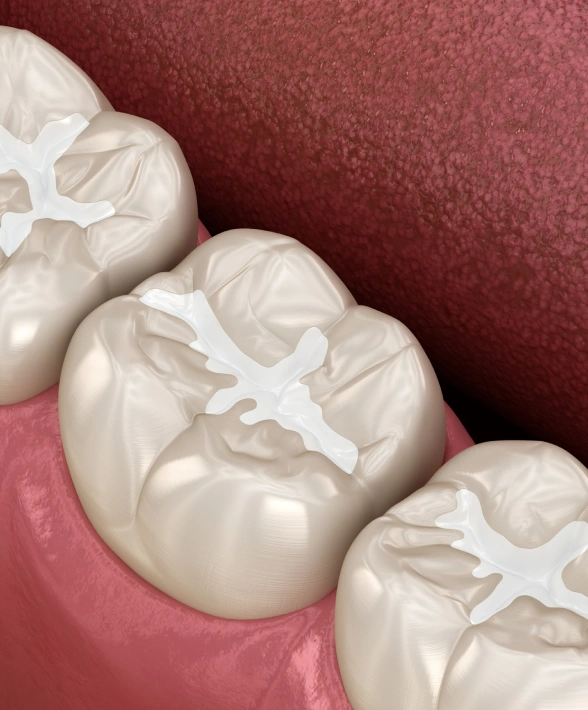
Look closely at a back molar and you will see a landscape of narrow pits and grooves running across the chewing surface. Those grooves are often narrower than a single toothbrush bristle, which means no amount of careful brushing clears them out. Food and bacteria settle in, and because the enamel at the base of a groove is thinner than elsewhere, decay takes hold quickly. This is why the overwhelming majority of cavities in children appear on the biting surfaces of back teeth rather than anywhere else in the mouth. A dental sealant solves the problem mechanically by flowing into those grooves and hardening into a smooth, sealed surface that a toothbrush can actually clean.
At our North Port dental office, Dr. Annie Smith applies sealants herself as part of a routine preventive visit. There is no drilling, no injection and no discomfort, and a full set of molars usually takes only a few minutes. Because Dr. Smith is the sole provider here, she is also the one checking those sealants at every future cleaning, so wear gets caught before decay can start underneath. And if a sealant she has placed chips or comes loose within the year, our one-year warranty covers replacing it.
Schedule a Preventive Visit
Why Sealants Are One of the Best Returns in Dentistry
Dental sealants are one of the most effective ways to prevent cavities, reducing the risk of decay on the chewing surfaces of teeth by up to 80% during the first few years after placement. The procedure is quick, painless, and completely non-invasive, requiring no drilling or removal of healthy tooth structure. It's a simple preventive treatment that can provide lasting protection for newly erupted permanent molars when they're most vulnerable to decay.
Preventing cavities with sealants also helps reduce the need for fillings and other restorative treatments later in life. The appointment takes just minutes, is well tolerated by children, and can save families time, expense, and future dental visits. Most dental insurance plans cover sealants for children, making them an easy and valuable investment in your child's long-term oral health.
Who Benefits Most from Dental Sealants?
Dental sealants are often associated with children, but age isn't the only factor. Dr. Smith evaluates the shape of your teeth, cavity risk, and oral health to determine whether sealants are the right choice.
- Children & Preteens - Permanent molars are most vulnerable to cavities soon after they erupt. Sealing these teeth early provides long-lasting protection. Baby molars may also benefit if they have deep grooves or a history of decay.
- Teenagers - Changing diets, orthodontic treatment, and inconsistent brushing can increase the risk of cavities. Sealants help protect newly erupted second molars during these higher-risk years.
- Adults with Deep Grooves - Adults with healthy molars but deep pits and fissures may benefit from sealants to help prevent future decay.
- Patients at Higher Risk for Cavities - Sealants are especially beneficial for people with frequent cavities, orthodontic appliances, dry mouth, or conditions that make brushing and flossing more difficult.
How a Sealant Is Placed, Start to Finish
Nothing about this appointment involves drilling, injections or discomfort, and the whole thing is over quickly. Here is each step so you or your child know exactly what to expect. You can eat and drink normally straight afterward. There is no numbness to wait out and no aftercare beyond ordinary brushing.
Examination first
Dr. Smith examines the tooth and reviews x-rays to confirm the grooves are free of decay. This is the step that matters most, because a sealant should never be placed over active decay.
Cleaning the surface
The chewing surface is cleaned thoroughly so nothing is trapped underneath. Any debris left in a groove would compromise how well the sealant bonds.
Drying and isolating the tooth
The tooth is dried and kept dry with cotton or a small barrier. Moisture is the main enemy of a good seal, so this step gets proper attention.
Preparing the enamel
A mild etching solution is applied for a few seconds and then rinsed away. It microscopically roughens the surface so the sealant grips properly. It does not remove tooth structure and it does not hurt.
Applying the sealant
The liquid sealant is painted into the grooves, where it flows into every pit and fissure. It is tooth colored or clear, so it is not visible when your child smiles.
Curing with light
A curing light hardens the material in seconds. There is no sensation beyond a bright light near the tooth.
Checking the bite
Dr. Smith checks that the sealant does not sit high against the opposing tooth and smooths it if needed, so nothing feels odd when your child bites down.
Monitoring at every future visit
Sealants are checked at every cleaning from that point on. If one has worn thin or chipped, it is topped up or replaced, and within the first year that replacement is covered by our warranty.
Are Dental Sealants Safe?
Dental sealants are considered safe and are recommended by both the American Dental Association and the American Academy of Pediatric Dentistry. While some sealant materials may release trace amounts of BPA immediately after placement, the exposure is extremely low—well below levels considered a health concern. The benefits of preventing cavities far outweigh this minimal exposure.
Sealants are applied to the surface of the tooth without removing healthy enamel, and the procedure is quick, painless, and requires no anesthetic. While sealants protect the chewing surfaces from decay, they don't replace good oral hygiene. Brushing, flossing, and regular dental checkups remain essential for maintaining a healthy smile.
Protect Those Molars Before Decay Reaches Them
Sealants are applied during a routine cleaning and exam, so there is no separate appointment to arrange. New patients start at $119 for a cleaning, complete digital x-rays and a full exam with Dr. Smith. Our membership plan covers children twelve and under from $33 a month with 20% off treatment including sealants, veterans receive 10% off, and anything we place is guaranteed for a full year.
Request Appointment