12497 South Tamiami Trail, Unit 2, North Port, FL
When a Filling Is Not Enough to Save a Tooth
A tooth can survive a lot before it needs a crown. Fillings handle small to moderate decay well, but once too much natural structure is gone, from a large cavity, a crack, or root canal treatment, there is not enough healthy tooth left for a filling to bond to reliably. A crown covers the whole tooth above the gumline and gives it back the strength to bite and chew normally, right here at our North Port office.
Dr. Annie Smith plans and places every crown herself, from the impression or scan through the final fit, so the person who diagnosed the problem is the one restoring it. She matches the color to your other teeth and checks your bite before you leave, and every crown she places is backed by our one-year warranty.
Schedule Your Crown Consultation
What Is a Dental Crown?
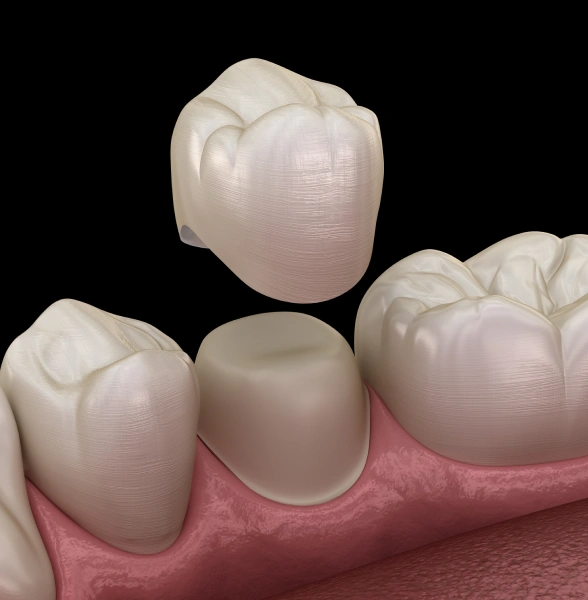
A dental crown is a custom-made cap that fits over a damaged tooth from the gumline up, restoring its full shape, size and strength. Think of it as a protective shell. The natural tooth remains underneath, trimmed slightly to make room, and the crown takes over the job of withstanding bite force and protecting what is left from further damage.
Crowns are made from dental-grade materials strong enough to handle years of chewing, and they are matched to the color and shape of the teeth around them so nothing looks obviously repaired. Once cemented in place, a crown functions exactly like a natural tooth and is cleaned the same way.
When a Crown Is the Right Treatment
A crown is not the first option for a damaged tooth, it is what comes next after a filling stops being enough. Dr. Smith recommends one only when the tooth genuinely needs full coverage to stay functional long term.
- A cavity too large for a filling to support without weakening the tooth further
- A tooth cracked or fractured, especially if the crack runs toward the gumline
- A tooth that has just completed root canal therapy and needs protection from fracturing
- Severe wear from grinding that has worn teeth down significantly
- A large old filling that has failed and taken more of the tooth with it
- Cosmetic reshaping of a tooth that is discolored, misshapen or noticeably smaller than its neighbors
- Anchoring a bridge, where crowns on the teeth beside a gap support the tooth between them
If your tooth can still be saved with something less than a crown, Dr. Smith will tell you that instead. She would rather do less work that holds up than more work that was not needed.
From Prep to Permanent Crown: What to Expect
Getting a crown typically takes two appointments about one to two weeks apart, since most crowns are custom-made at a dental laboratory. Here is how the process runs at Wellen Family Dental.
Examination and X-ray
Dr. Smith confirms the tooth needs a crown rather than a smaller restoration, and checks the health of the root and surrounding bone.
Numbing and preparation
The tooth is numbed, then reshaped to make room for the crown material, removing any remaining decay along the way.
Impression or digital scan
A mold or scan captures the exact shape of your prepared tooth, which the lab uses to build a crown that fits precisely.
A temporary crown
A protective temporary is placed while your permanent one is being made, so the tooth stays covered and usable.
Lab fabrication
Your permanent crown is custom-made to match the shade and shape of your natural teeth, typically over one to two weeks.
Fitting the permanent crown
At your second visit, the temporary is removed and the permanent crown is checked for fit and bite, adjusted as needed.
Cementing it in place
Once you and Dr. Smith are both satisfied, the crown is permanently cemented and your bite is checked one final time.
How Long a Crown Lasts and How to Protect It
A well-made crown commonly lasts ten to fifteen years, and many last well beyond that with reasonable care. What shortens that lifespan is usually behavior rather than the material itself, things like grinding at night, chewing ice, or skipping the flossing that keeps the edge of the crown clean.
- Brush and floss around a crown exactly as you would a natural tooth, since the gumline beneath it can still develop decay or gum disease
- Wear a night guard if you grind your teeth, the most common reason a crown chips or a tooth beneath it fractures
- Avoid chewing ice, hard candy, or using your teeth as a tool
- Keep up with six-month cleanings, where Dr. Smith checks the crown's margins for any sign of a leak
- Mention new sensitivity, looseness, or a change in your bite promptly rather than waiting for your next visit
If a crown Dr. Smith placed fails within the first year, our warranty covers correcting it.
Cost, Insurance and Ways to Pay for Your Crown
Crown pricing at our North Port office starts at $899, with your exact cost depending on the material and whether the tooth needs additional work such as a build-up first. Most dental insurance plans cover crowns as a major service, often around 50%, and our team verifies your specific benefits and gives you a written estimate before anything is scheduled.
- Most major dental insurance accepted and filed on your behalf
- Membership plan members receive 20% off crowns, with plans starting at $33 a month
- 10% discount for veterans, 5% for cash payment
- Financing available through Cherry and CareCredit, with many plans at 0% interest
- Every recommendation explained in English or Spanish, so you understand exactly what is being suggested and why
Ask our team to run the numbers before you decide anything. We would rather you have a real figure than a guess.
Get That Tooth Restored Before It Gets Worse
A cracked or heavily filled tooth rarely improves by waiting. Dr. Smith will examine it, show you what she sees and tell you honestly whether a crown, a filling, or something else is the right call. Crowns start at $899, most insurance is accepted, and our membership plan takes 20% off from $33 a month. Every crown we place is guaranteed for a full year.
Request Appointment